
When the winter wind howls against your windows, you expect your radiators to hum with a steady, reliable warmth. There is nothing quite like the comfort of a cozy home while the world outside freezes. However, what happens when one room feels like a sauna while the next feels like a walk-in freezer? Or perhaps your radiators stay lukewarm for hours before suddenly surging with heat? These inconsistencies are more than just a nuisance. They are signals from your home that something is off balance.
If you find yourself constantly adjusting the thermostat or wearing a sweater in the living room, you might be facing a complex mechanical puzzle. Finding a quality boiler service in Worcester, MA, is usually the first step for homeowners facing these cold spots. We see these patterns daily. We know that the root cause often hides in plain sight. It usually boils down to a fight between the machine that makes the heat and the network that carries it.
The Heart of the House: Is the Boiler Failing?
The boiler is the engine of your heating system. It has a single job: heat water or create steam and send it out. When the boiler itself is the problem, you often notice global issues rather than just one cold room. If the entire house takes hours to reach the target temperature, the burner might be struggling. This can happen due to carbon buildup or a failing ignition source.
We often find that short-cycling is a major culprit for uneven temperatures. Short-cycling occurs when the boiler turns on and off too rapidly. It reaches its internal temperature limit before the heat actually travels to your furthest radiators. This leaves the rooms closest to the boiler warm, while the rest of the house starves for energy. If your unit clicks on and off every few minutes, the machine is likely misfiring or sized incorrectly for the space.
The Highway System: Blockages in the Pipes
Sometimes the boiler is perfect, but the roads it uses are blocked. Over time, the water inside your heating loops can react with the metal pipes. This creates a black, sludgy substance known as magnetite. This sludge is heavy. It settles in the bottom of radiators and at the low points of your pipework.
When sludge builds up, it creates physical resistance. The water simply cannot flow through the pipes at the speed required to keep every room warm. You might notice that the bottom half of your radiator feels ice cold while the top is scalding. This is a classic sign of a system issue rather than a boiler failure. We use specialized flushing techniques to clear these blockages and restore the flow. Without a clear path, even the most powerful boiler cannot do its job.
The Circulator Pump: The Weak Link
In modern forced hot water systems, a circulator pump does the heavy lifting. It pushes the water through the house. If this pump starts to fail, it might still spin but lack the torque to move water to the second floor or distant wings of the home.
A dying pump often runs hot to the touch or makes a low humming noise. If your radiators are only hot near the boiler, the pump is likely the suspect. It simply lacks the push to complete the circuit. We check these pumps for electrical health and mechanical wear during our standard plumbing services in Worcester. A simple pump replacement can often save a homeowner from the cost of a full boiler upgrade.
Thermostat Location
Your thermostat is the brain, but it can be easily fooled. If your thermostat sits in a hallway that stays warm, it will tell the boiler to shut down before the drafty bedrooms get enough heat. Conversely, if it sits near a drafty window, the boiler will run non-stop, overheating the rest of the house.
Smart thermostats and zone valves add complexity. A sticking zone valve can prevent heat from reaching a specific floor even if the boiler is firing perfectly. We look at the electrical signals between your wall controls and the basement equipment. If the message to heat up never arrives, the system stays dormant regardless of how much fuel you burn.
Pressure Problems and the Expansion Tank
Boiler systems are closed loops. They rely on specific pressure levels to function. If the pressure is too low, the water cannot reach high-elevation radiators. If it is too high, the safety valves will leak, causing a mess and a loss of efficiency.
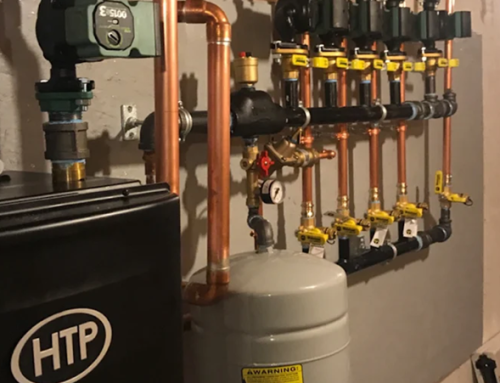
The expansion tank manages the natural growth of water as it heats up. If the internal diaphragm of that tank fails, your system pressure will swing wildly. These swings cause the boiler to act unpredictably. You might get a burst of heat followed by a total lockout. Checking the pressure gauge on your unit is a quick way to see if the system is stable. If that needle jumps around, your expansion tank needs a look.
The “Home Comfort” Approach
Reliable heat is a necessity, not a luxury. When your home feels like a collection of different climates—freezing in the kitchen but sweltering in the den—it disrupts your daily life and peace of mind. These “mystery cold spots” are often a sign of underlying imbalances that prevent your system from distributing warmth where it’s needed most.
Our team at Clay Plumbing & Heating understands that a comfortable home is a happy one. Whether the issue lies deep within the boiler’s combustion chamber or is simply a matter of trapped air in the pipes, we have the specialized diagnostic tools to find the answer quickly. We take the guesswork out of the equation, ensuring that every room in your house reaches the temperature you set on the thermostat.
We want to ensure your family stays warm all winter long without the stress of unexpected failures. By addressing these inconsistencies now, you aren’t just fixing a cold room; you are protecting your equipment and keeping it running at peak performance for years to come. Trust us to restore the balance your home deserves.
Contact us for boiler service: 508-892-1644
Frequent Questions About Heating Gaps
- Why is my upstairs cold when the downstairs is hot?
Heat naturally rises, but water needs pressure to climb. If your upstairs is cold, you likely have air trapped in the upper radiators or low system pressure. The pump might also be too weak to lift the hot water to the higher floors effectively. - How often should I have my system flushed?
We recommend a professional check every few years. If you notice dark water when bleeding radiators or see cold spots at the bottom of the units, a power flush is necessary. This removes the sludge that causes heart attacks in your pipes. - Does a noisy boiler mean it is about to break?
Banging or kettling sounds usually mean lime scale is coating the heat exchanger. This makes the boiler overheat locally, creating steam bubbles that pop loudly. While it might not explode, it is very inefficient and will eventually crack the heat exchanger if left alone. - Can a faulty thermostat cause uneven heat?
Yes, especially if the sensor is outdated or placed in a poor location. If the thermostat is near a heat source like a lamp or a kitchen, it will turn the boiler off too soon. This leaves rooms further away without enough time to warm up.